
$2.99
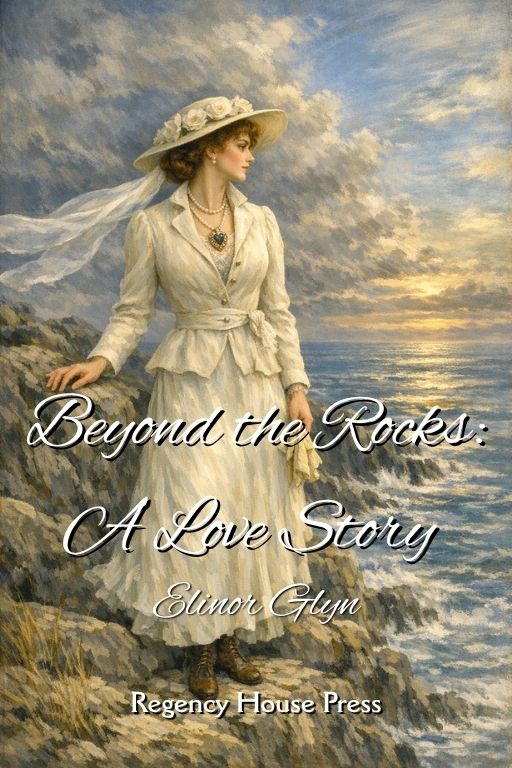
Beyond the Rocks: A Love Story
Elinor Glyn
Historical Romance
Published 1906
Synopsis
Beyond the Rocks tells the emotional and societal struggles of Theodora Fitzgerald, a young English aristocrat whose family’s diminished fortunes force her into an arranged marriage with Josiah Brown, an elderly but wealthy Australian businessman. Set in the early Edwardian era in Europe, the narrative charts Theodora’s dutiful acceptance of her marital obligations despite her secret love for the handsome Lord Hector Bracondale, a nobleman she meets at social functions. Through Theodora’s inner conflict and her eventual reunion with Hector after her husband’s death, the novel examines whether true love can transcend social obligations and the turbulence of societal constraints, especially in a world that prizes appearances above all else.
Novel Excerpt
As they rushed through the smiling country, both women’s spirits rose, and Mrs. McBride’s were the spirits of experience and did not mount without due cause. Since she had been a girl in Dakota and passionately in love with her first husband—the defunct McBride was a second venture—she had not met a man who could quicken her pulse like Captain Fitzgerald. It was a curious coincidence that they both had already two partners to regret. It was an extra link between them, and Jane McBride, who was superstitious, read the omen to mean that this time each had met his true mate.
“If he is irresistible to-day, I think I shall clinch matters,” she was saying to herself.
While Theodora’s musings ran:
“How beautiful Versailles will look, and I dare say he will know all about its history, and be able to tell me interesting things; and oh! I am so glad I put on this frock, and oh! I am so happy.”
And aloud they spoke of paradise plumes and the new gray, and the merits and demerits of Callot and Doucet and Jeanne Valez. And the widow said some bright American things about husbands and the world in general that conveyed crisp truths.
The drive seemed all too short, and there were their two cavaliers in the court-yard awaiting them at the Réservoirs, having arrived just before them.
To the end of her life Theodora will remember that glorious May day. Its even minutest detail, the color of the chestnut-trees, the tint of the sky, the scent in the air, every line of his figure and turn of his head, every look in his eyes—and they were many and varied—and also and alas! every growing emotion in her own heart. But at the moment all was gladness, and exquisite, young, irresponsible joy. Sans arrière-pensée or disquieting reflection.