
$2.99
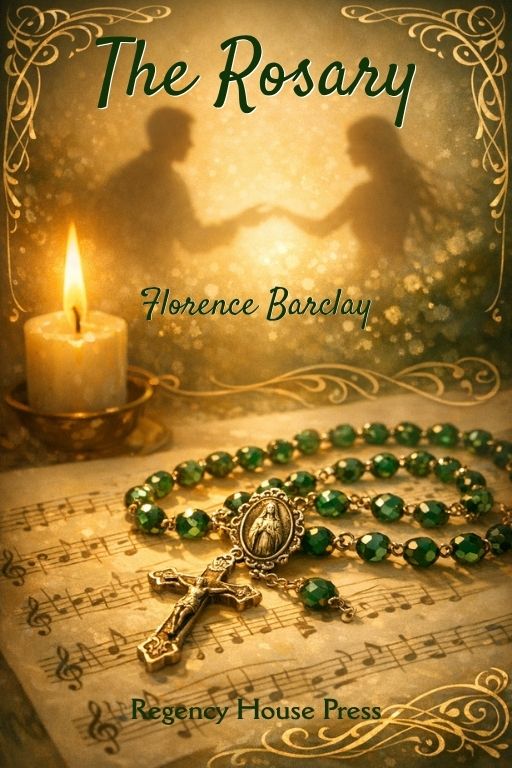
The Rosary
Florence Barclay
Classic Romance
Published 1909
Synopsis
The Rosary tells the story of Jane Champion, a plain but strong‑willed woman who refuses the marriage proposal of the handsome artist Garth Dalmain, believing her lack of beauty makes her unworthy of his devotion. After Garth is blinded in a tragic accident, the two are given a second chance at love when Jane, under an assumed name, becomes his nurse and reconnects with him in secret. Set in early‑20th‑century England, the novel explores themes of inner beauty, sacrifice, and the redemptive power of love. The emotional tension grows as Jane struggles between honesty and the fear of losing Garth once he learns her identity. The narrative emphasizes spiritual connection and the triumph of character over appearance. The story ultimately celebrates steadfast devotion and the courage required to embrace vulnerability.
Novel Excerpt
Jane Champion was now in her thirtieth year. She had once been described, by one who saw below the surface, as a perfectly beautiful woman in an absolutely plain shell; and no man had as yet looked beneath the shell, and seen the woman in her perfection. She would have made earth heaven for a blind lover who, not having eyes for the plainness of her face or the massiveness of her figure, might have drawn nearer, and apprehended the wonder of her as a woman, experiencing the wealth of tenderness of which she was capable, the blessed comfort of the shelter of her love, the perfect comprehension of her sympathy, the marvellous joy of winning and wedding her. But as yet, no blind man with far-seeing vision had come her way; and it always seemed to be her lot to take a second place, on occasions when she would have filled the first to infinite perfection.
She had been bridesmaid at weddings where the charming brides, notwithstanding their superficial loveliness, possessed few of the qualifications for wifehood with which she was so richly endowed.
She was godmother to her friends’ babies, she, whose motherhood would have been a thing for wonder and worship.
She had a glorious voice, but her face not matching it, its existence was rarely suspected; and as she accompanied to perfection, she was usually in requisition to play for the singing of others.
In short, all her life long Jane had filled second places, and filled them very contentedly. She had never known what it was to be absolutely first with anyone. Her mother’s death had occurred during her infancy, so that she had not even the most shadowy remembrance of that maternal love and tenderness which she used sometimes to try to imagine, although she had never experienced it.