
$2.99
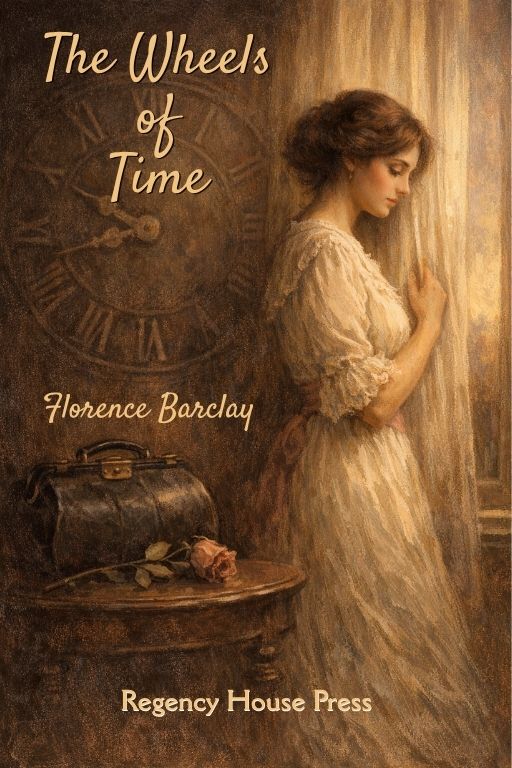
The Wheels of Time
Florence Barclay
British Romance
Published 1908
Synopsis
The Wheels of Time focuses on the marriage of Dr. Deryck Brand, a respected psychologist, and his wife Flower, whose emotional distance and domestic obligations strain their relationship. Set in early‑20th‑century England, the novel examines the pressures of professional duty, societal expectations, and the quiet sacrifices within domestic life. Flower’s struggle to balance motherhood with her husband’s need for companionship creates growing tension, culminating in a crisis when Deryck is gravely injured in an accident. This turning point forces Flower to confront her own shortcomings and rediscover the depth of her love for him. Through intimate domestic scenes we see how small misunderstandings can widen into emotional distance, and how love can ultimately bridge them.
Novel Excerpt
On this particular morning, when the doctor stood at the door looking into the boudoir, Flower was bending over a huge bowl of daffodils, arranging each golden trumpet to her liking.
The spring sunshine came glancing through the window and touched her hair to the gold of the blossoms. The doctor noted this, and a sudden look of adoration softened the cool clearness of his eyes.
The baby’s godmother, on this last day of her visit, sitting by the fire with her feet on the fender, opening and smoothing a copy of the Times, glanced up, past the sunshine and the daffodils, saw that look and promptly retired behind a leading article.
The baby’s godmother was a perfectly beautiful woman in an absolutely plain shell, but, unfortunately, no man had yet looked beneath the shell and seen the woman herself in her perfection. She would have made earth heaven for a blind lover who, not having eyes for the plainness of her face or the massiveness of her figure, might have drawn nearer and apprehended the wonder of her as a woman; experiencing the wealth of tenderness of which she was capable, the blessed comfort of the shelter of her love, the perfect comprehension of her sympathy, the marvellous joy of winning and wedding her. But as yet no blind man with far-seeing vision had come her way, and it always seemed to be her lot to take a second place on occasions when she would have filled the first to infinite perfection.
She had been bridesmaid at the doctor’s wedding, to whom she would have made a wife such as Flower, develop as she might, could never be. She was godmother to the baby—she whose arms ached for motherhood itself and whose motherliness would have been a thing for men to kneel down and worship. She found her duties as godmother to various babies consisted chiefly in praying that the foolish mistakes made by their parents might be overruled by an all-wise Providence and work out somehow to their ultimate good.